The short answer
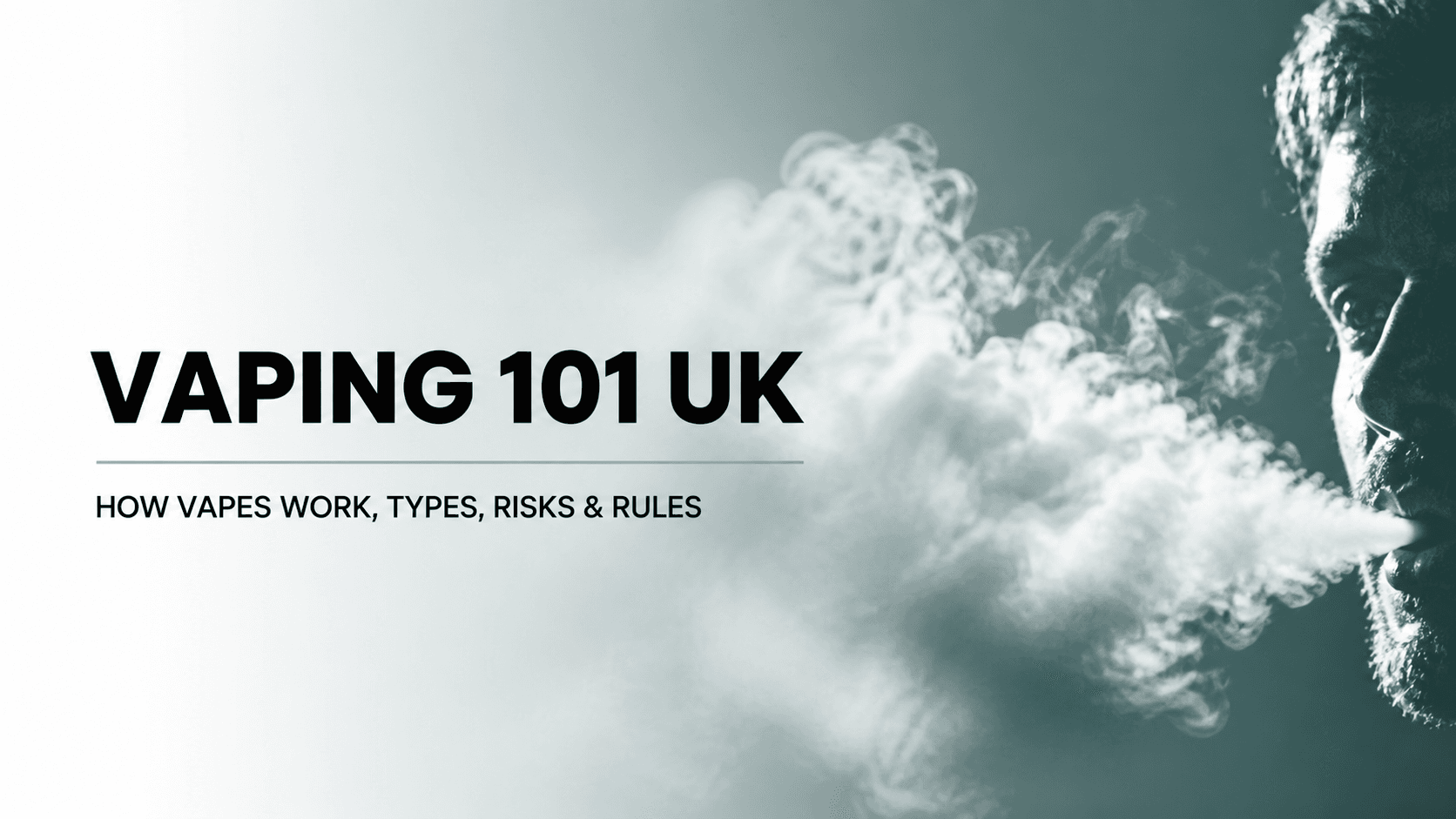
A vape is a battery-powered device that heats e-liquid to form an aerosol for inhalation. It does not burn tobacco, so it does not create cigarette tar or carbon monoxide. That difference makes regulated nicotine vaping much less harmful than smoking for an adult who switches completely, but vaping is not risk-free and is not recommended for children, young people, or non-smokers.
Current legal consumer choices include rechargeable devices with replaceable prefilled pods, refillable pod kits, and refillable tanks or regulated mods. UK businesses cannot sell single-use vapes. Nicotine delivery varies with liquid concentration, formulation, device, and behaviour, so a label or cigarette count cannot predict an exact personal dose.
Key points
- Vapes heat liquid into an aerosol; they do not burn tobacco.
- Lower risk than smoking does not mean harmless, and the benefit depends on replacing cigarettes.
- Legal consumer formats after the single-use ban are rechargeable and refillable, with replaceable coils where present.
- Nicotine delivery depends on the liquid, device, settings, experience, and puffing behaviour.
- Children, young people, and people who do not smoke should not vape.
Vaping combines an electrical device, a liquid formulation, heating conditions, and human behaviour. Any explanation that treats one of those as the whole system will be incomplete. “Ten puffs”, “20mg”, or “sub-ohm” cannot by itself describe the dose, risk, or suitability for a person.
This primer establishes the shared basics. Follow the supported quit plan if your objective is to stop smoking, the e-liquid ingredients guide for composition and aerosol evidence, and the vape choice guide for a format decision.
Current reusable device types in plain language
| Comparison point | How it works | Useful fit | Maintenance and limits |
|---|---|---|---|
| Prefilled pod device | A rechargeable battery accepts a sealed replacement pod | People who value a simple routine and fixed compatible refills | Pod range is closed, and the correct replacements must remain available |
| Refillable pod device | A rechargeable battery uses a pod filled from a bottle | People who want liquid choice in a compact format | Needs correct liquid, filling, and periodic pod or coil replacement |
| Refillable tank or regulated mod | A larger device powers a refillable tank and replaceable coil | Experienced adults who need more control over airflow and output | Adds settings, coil care, and sometimes removable-battery responsibility |
Important context: Single-use vapes are omitted because UK businesses have been prohibited from selling or supplying them since 1 June 2025.
From button press to aerosol
The battery supplies electrical power
Draw activation or a button tells the regulated device to power its heating element within the supported design.
Liquid reaches the wick and coil
A pod or tank holds e-liquid. The wick must stay supplied; an empty or badly saturated wick can create a burnt draw.
Heat forms an aerosol
The liquid is heated into droplets, gases, and particles for inhalation. “Vapour” is everyday wording, but aerosol is more accurate.
The user and device determine delivery
Liquid strength, nicotine form, power, airflow, draw length, frequency, and experience all affect nicotine exposure.
Parts need replacement and safe disposal
Pods and coils wear out, batteries age, and electrical parts require appropriate take-back or recycling rather than household rubbish.
The correct next step depends on where you start
If you are an adult who smokes and wants to quit
Use a Stop Smoking Service and choose a simple regulated option that controls cravings
Expert support plus adequate nicotine and a usable routine improves the chance of replacing cigarettes.
Watch for: Do not choose nicotine from cigarette count alone, and aim for zero cigarettes to obtain the full benefit.
If you already vape and no longer smoke
Keep the device safe and consider a gradual nicotine reduction only when stable
Avoiding a return to smoking is more important than reducing nicotine too quickly.
Watch for: Withdrawal or renewed smoking urges are reasons to pause and seek support.
If you do not smoke or vape
Do not start vaping
There is no smoking-harm reduction benefit to offset aerosol exposure or nicotine dependence.
Watch for: Nicotine-free does not mean exposure-free or proven harmless.
If you are pregnant and want to stop smoking
Speak to a GP, midwife, pharmacist, or stop-smoking adviser
The NHS recommends licensed nicotine replacement as the usual option in pregnancy.
Watch for: A retail article cannot assess pregnancy, medicines, symptoms, or individual treatment.
Five rules that prevent common avoidable problems
Use the exact compatible pod, coil, liquid, battery, and charging arrangement described by the manufacturer. Do not charge unattended or overnight. Keep loose batteries in protective cases and away from metal objects. Stop using a device that is damaged, leaking, unusually hot, or producing a persistent burnt taste.
Keep nicotine liquid and used pods away from children and pets. Do not swallow liquid or apply it to skin. Report suspected side effects and product defects through MHRA Yellow Card, and use urgent medical help for severe symptoms. Return devices and batteries through an appropriate electrical recycling route.
Vaping 101 questions
Is vape aerosol just water vapour?
No. It is an aerosol formed from heated e-liquid and can contain nicotine, carriers, flavour-related compounds, and substances formed during heating.
Is vaping safe?
It is not risk-free. For an adult who smokes, regulated vaping is much less harmful than continued smoking, especially when cigarettes are replaced completely. Non-smokers should not start.
What vape types are legal to sell in the UK?
Reusable products can be sold when they meet the applicable rules. They must be rechargeable and refillable, with user-replaceable coils where present. Single-use vapes cannot be sold or supplied.
Does 20mg e-liquid deliver the same nicotine to everyone?
No. The label gives liquid concentration. Delivery also varies with nicotine form, device, power, draw pattern, frequency, and user experience.
Can I get a vape on NHS prescription?
The NHS currently says e-cigarettes are not available from a GP on prescription. Local Stop Smoking Services can still advise on quitting options and practical support.
Related reading
Sources and verification
- Using e-cigarettes to stop smokingNHSChecked: 8 August 2026
Supports: How vapes work, adult quit context, relative risk, complete switching, pregnancy, fire safety, and Yellow Card reporting.
- Nicotine vaping in England: 2022 evidence update summaryOffice for Health Improvement and DisparitiesPublished or updated: 29 September 2022Checked: 8 August 2026
Supports: Nicotine-delivery variability, exposure evidence, health uncertainty, poisonings, fires, and evidence limitations.
- E-cigarettes: regulations for consumer productsMedicines and Healthcare products Regulatory AgencyChecked: 8 August 2026
Supports: Consumer product notification, nicotine and container limits, ingredients, labelling, and reporting.
- Single-use vapes ban: information for businessesDepartment for Environment, Food and Rural AffairsPublished or updated: 3 July 2025Checked: 8 August 2026
Supports: Current single-use ban and legal reusable-device definition.
- Vaping: a guide for health and social care professionalsNational Centre for Smoking Cessation and TrainingChecked: 8 August 2026
Supports: Device types, nicotine delivery, switching practice, and professional support context.
Editorial record
- Last reviewed
- 8 August 2026
- Next review due
- 8 December 2026
What changed
Rebuilt the legacy broad primer around current post-ban device types, aerosol rather than vapour, complete-switch evidence, UK regulation, nicotine variability, practical operation, and explicit audience boundaries.
Disclosure
Vape Forest sells vaping products. This health-information guide does not rank products, prescribe nicotine, use customer data, or claim vaping is harmless. Commercial categories are linked only where they help an adult understand a device format.