The short answer
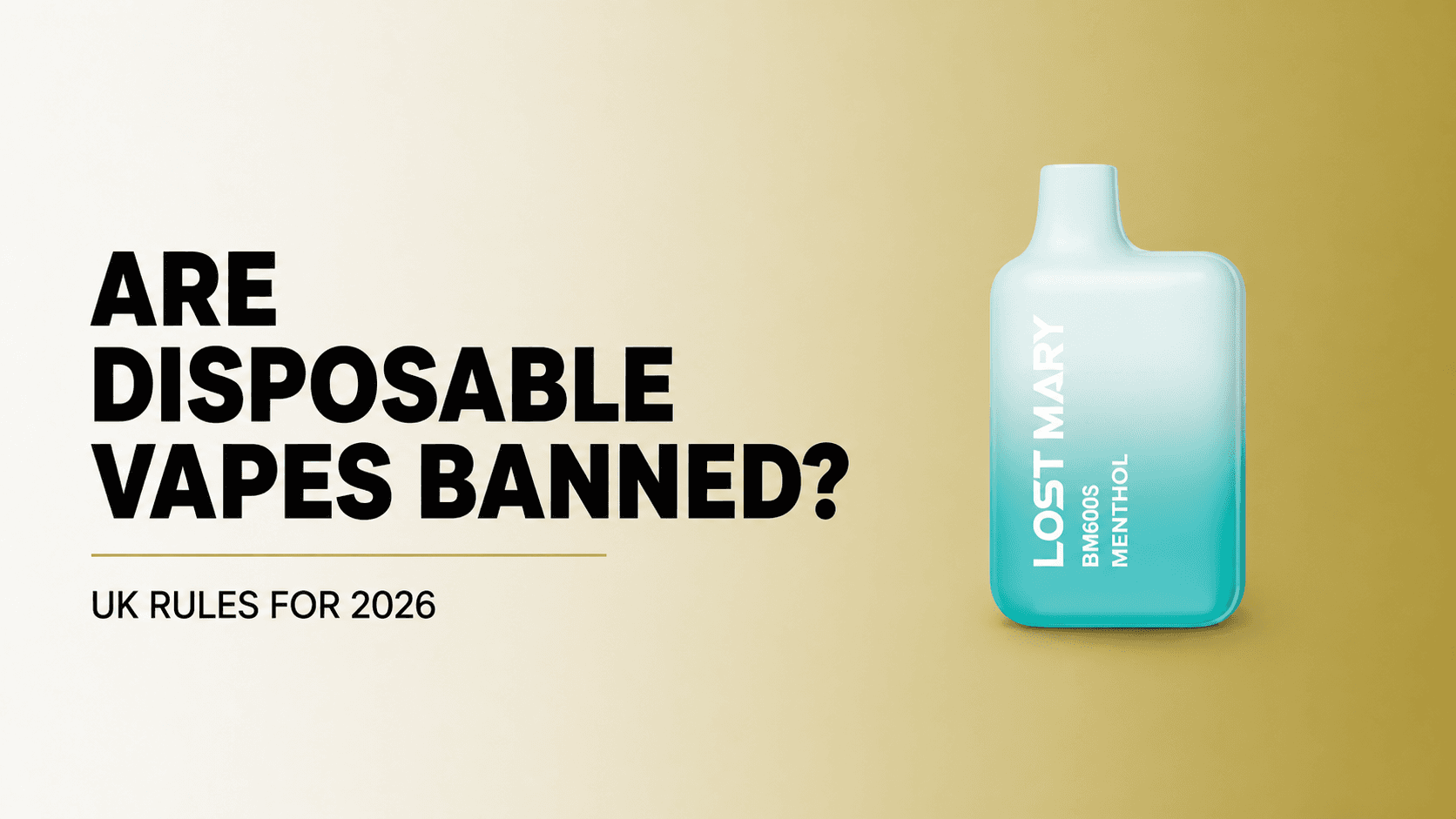
UK businesses have been prohibited from selling or supplying single-use vapes since 1 June 2025. The ban applies online and in shops, to nicotine and non-nicotine products. A device is not reusable merely because its battery recharges. It must also be refillable, and any coil must be replaceable by the user. The relevant replacement pods, refill containers, or coils must be separately available to buy.
The ban targets business supply, offering for sale, and stock intended for supply. It does not turn a consumer carrying an old single-use vape into the offence described by the business guidance. Old devices should still be returned through a vape take-back or appropriate electrical recycling route, never placed in household rubbish. Reusable products must also satisfy the separate nicotine-product, notification, age, and general safety rules that apply to them.
Key points
- Businesses cannot sell, supply, offer, or stock single-use vapes for supply in the UK.
- The ban has applied since 1 June 2025 and covers both nicotine and non-nicotine vapes.
- A legal reusable design needs a rechargeable battery, a refillable or replaceable liquid container, and a user-replaceable coil where a coil is present.
- A charging port, a large puff number, or the word pod kit does not prove compliance.
- Reusable products still need to meet separate product rules and should be recycled as electrical equipment at end of life.
The word disposable now causes more confusion than clarity. Some shops and shoppers still use it for any compact, prefilled, draw-activated device. The law uses a functional test instead. It asks whether the battery can be recharged, whether the liquid system can be refilled or replaced, whether the coil can be replaced, and whether the necessary replacements are actually available separately.
This guide explains that test without certifying a product from its box or puff claim. For product-authenticity checks, read how to investigate a suspected fake vape. For the practical differences between current formats, see the prefilled-kit pros and cons. Rankings belong in a separately maintained reusable prefilled-kit comparison, not inside a legal explainer.
Apply the reusable test to the whole product
| Comparison point | Rechargeable battery | Refillable or replaceable container | Replaceable coil system | Likely ban position |
|---|---|---|---|---|
| Traditional single-use bar | No | No | No | Single-use and prohibited for business supply |
| Rechargeable but sealed liquid system | Yes | No | No or inaccessible | Still single-use because rechargeability alone is insufficient |
| Refillable but non-rechargeable device | No | Yes | May be replaceable | Still single-use because the battery cannot be recharged |
| Rechargeable closed-pod kit | Yes | Fresh prefilled pods are separately available | Coil is replaced with the separately available pod | Can meet the reuse definition, subject to all other rules |
| Rechargeable refillable tank or pod kit | Yes | User refills the tank or cartridge | Coil or coil-containing pod is separately replaceable | Can meet the reuse definition, subject to all other rules |
Important context: This table explains the official test but is not a product certification. Packaging, instructions, component design, and the real availability of replacements must agree.
What the single-use ban actually prohibits
Official guidance states that businesses and organisations cannot sell or supply single-use vapes, offer them for sale or supply, or keep stock they intend to supply. The scope includes online sellers, physical retailers, importers, wholesalers, manufacturers, healthcare settings, and stop-smoking services. It applies whether or not the vape contains nicotine.
The official definition treats a vape as single-use if it is not designed or intended to be reused, including when it is not refillable, not rechargeable, or both. To qualify as reusable, the required refill and coil replacements must be separately available to the user. A theoretical way to prise open a sealed device is not the designed refill route.
DEFRA single-use vape ban guidanceEvidence checked 2026-08-06
Limitation: The four UK nations use their own implementing regulations and enforcement arrangements. The central practical definition is aligned, but a business should obtain local Trading Standards advice for a disputed product.
Seven checks before buying a reusable vape
Ignore the category nickname
Words such as disposable-style, big-puff, pod kit, or rechargeable do not settle the legal status. Identify the battery, liquid container, coil, and replacement route.
Confirm that the battery genuinely recharges
Look for the charging method and manufacturer instructions. A socket is useful evidence but not enough by itself because the liquid and coil tests must also be satisfied.
Identify the refill method
The device should accept user-filled liquid or a separately available replacement container, cartridge, or prefilled pod. Do not treat an internal reservoir as refillable merely because liquid moves into a small pod during use.
Identify how the coil is replaced
The user must be able to replace the coil, either directly or by replacing the pod or cartridge that contains it. The matching part should be sold separately.
Verify that replacements can actually be bought
Find the matching pods, containers, or coils from a credible seller before buying the starter device. A promise that replacements may arrive later does not provide a useful reuse system.
Check the nicotine product record
For a nicotine product, search the MHRA published products list using the exact brand and variant. Ask the retailer to resolve missing or mismatched records rather than assuming that a similar name is enough.
Check labels, instructions, and seller accountability
Use a retailer that can explain the compatible parts, safe charging, nicotine strength, and recycling route. Walk away from altered packaging, unsupported health claims, or a seller who cannot identify the legal refill system.
Puff count is marketing, not the legal test
The single-use ban does not set a legal maximum number of puffs. A number such as 600, 10,000, or 30,000 does not by itself prove that a device is legal or illegal. Puff totals are estimates affected by draw duration, power, airflow, liquid delivery, and the test method. They should not be converted into guaranteed days of use or cigarette equivalents.
Nicotine products face a different set of rules. MHRA retailer guidance states a maximum nicotine concentration of 20mg/ml, a maximum 10ml presentation for a refill container, and a maximum 2ml presentation for an e-cigarette tank or cartridge sold to the consumer. A multi-part prefilled kit may combine a 2ml pod with separately presented refill containers, but every component and the overall supply arrangement still need to comply. A large headline puff claim does not override those limits.
Nicotine-containing products also need a published notification on the relevant MHRA list before legal supply. Publication is not a guarantee that every retail unit is authentic or that every claim on a listing is accurate. It is one necessary check alongside the physical design, labelling, seller, and exact variant.
Rules in force and changes still being developed
| Comparison point | Status on 6 August 2026 | What it means | What not to assume |
|---|---|---|---|
| Single-use vape ban | In force since 1 June 2025 | Business sale and supply of single-use vapes is prohibited | It does not prohibit every prefilled or compact vape |
| Existing nicotine-product rules | In force | Concentration, container, notification, packaging, and safety requirements still apply | Passing the reusable test does not prove compliance with these rules |
| Tobacco and Vapes Act 2026 | Received Royal Assent on 29 April 2026 | Creates duties and powers for further tobacco and vape controls | Not every possible restriction took effect on Royal Assent day |
| Packaging, flavour-name, device-appearance, and display proposals | Consultation open until 2 October 2026 | Government is consulting on how Act powers may be used | A consultation proposal is not yet a final retail rule |
Important context: Dates and commencement provisions matter. A future regulation should be described as proposed until final legislation and its effective date are confirmed.
What the ban means for consumers and businesses
For consumers: a shop should not sell or give you a single-use vape. If you already have one, the practical action is to stop treating it as ordinary rubbish and return it for recycling. If a product appears non-compliant, ask the retailer, use the MHRA consumer route for nicotine-product checks, or contact local Trading Standards.
For retailers: responsibility goes beyond accepting a supplier description. Official guidance says sellers must establish that products meet the reusable definition, keep evidence for inspections, make compatible refills and coils available, avoid stock intended for prohibited supply, and provide a take-back route. A retailer also needs to check the separate MHRA notification and product requirements.
For adult smokers: the ban changes product format, not the public-health objective. NHS guidance frames vaping as an option for adults stopping smoking, not as a product for non-smokers, children, or young people. Choose a simple reusable system that can be maintained, obtain appropriate stop-smoking support, and aim to stop cigarettes completely rather than chasing the largest puff number.
Recycle an old or finished vape safely
Do not put it in household waste or kerbside recycling
Vapes contain electrical components and batteries. Crushing or waste processing can damage a cell and create a fire risk.
Switch it off and keep it intact
Do not puncture a built-in battery or dismantle a sealed liquid system. Protect the device from damage while it waits to be returned.
Use a retailer take-back point or approved electrical recycling service
Official guidance says vape retailers must offer take-back for vapes and parts, including devices returned after the ban. Ask the retailer where the collection point is or use local-authority recycling guidance.
Separate removable batteries only when the instructions support it
Place removable cells in the correct battery collection route and protect terminals as the recycler directs. Leave built-in batteries inside the device for specialist handling.
Common questions about the disposable vape ban
Are disposable vapes illegal to buy in the UK?
A business cannot legally sell or supply a single-use vape in the UK. The ban has applied since 1 June 2025 and covers nicotine and non-nicotine products, online and in physical shops.
Is it illegal to own an old disposable vape?
The official business ban is framed around sale, supply, offering, and stock intended for supply, not simple consumer possession. Do not resell or give business stock away. Return an old or finished device through a vape take-back or approved electrical recycling route.
Is a rechargeable disposable legal?
Not automatically. It must also have a refillable or replaceable liquid container and a user-replaceable coil system, with the necessary replacements separately available. A rechargeable sealed device can still be single-use.
Are big-puff vapes legal in the UK?
Some reusable prefilled systems can be legal, but the puff number does not decide it. Check the reusable design, 2ml tank or cartridge and 10ml refill-container presentation limits for nicotine products, MHRA publication, labels, and exact replacement system.
Can a shop sell a nicotine-free disposable vape?
No. The single-use sales and supply ban covers vapes whether or not they contain nicotine. Separate nicotine-product rules may differ, but the environmental single-use test still applies.
Does an MHRA listing prove a device is reusable?
No. The MHRA list is an important check for notified nicotine products. The single-use ban applies a separate environmental design test. A responsible check needs both, alongside the exact variant, packaging, instructions, and replacement availability.
Have plain packaging and flavour-name restrictions started?
Do not describe the July 2026 proposals as final current rules. The government consultation on packaging, appearance, flavour descriptions, and display remains open until 2 October 2026. Check the final regulations and commencement date after the consultation process.
Where can I report a suspected illegal vape?
Raise the issue with the retailer and contact local Trading Standards if it is not resolved. For a nicotine product, consumers can also use MHRA guidance to check the notified-products list and report a suspected safety or quality concern.
Live products, prices and stock
This article explains the question or review. Use the linked shop pages for current product options, prices and availability.
Related reading
Sources and verification
- Single-use vapes ban: information for businessesDepartment for Environment, Food and Rural AffairsPublished or updated: 20 January 2025Checked: 6 August 2026
Supports: Ban date and scope, reusable-device definition, replacement availability, enforcement, leftover stock, and retailer take-back obligations.
- The Environmental Protection (Single-use Vapes) (England) Regulations 2024UK LegislationChecked: 6 August 2026
Supports: Primary legal text for the English definition, prohibition, enforcement framework, and commencement.
- E-cigarette and vape advice for retailers and producersMedicines and Healthcare products Regulatory AgencyChecked: 6 August 2026
Supports: Nicotine concentration and presentation limits, notification duties, and the requirement for publication before legal supply.
- E-cigarette and vape advice for consumersMedicines and Healthcare products Regulatory AgencyChecked: 6 August 2026
Supports: Consumer use of the MHRA notified-products list and routes for suspected non-compliance or product safety concerns.
- Regulations: Waste Electrical and Electronic EquipmentUK GovernmentChecked: 6 August 2026
Supports: Specific collection and recycling obligations for retailers selling vapes in stores or online.
- Tobacco and vapes: packaging, appearance and displayDepartment of Health and Social CarePublished or updated: 10 July 2026Checked: 6 August 2026
Supports: Status of the Tobacco and Vapes Act, July 2026 proposals, consultation period, and the distinction between powers and implemented restrictions.
- Young people and vapingNHS Better HealthChecked: 6 August 2026
Supports: Public-health boundary that vaping is for adults stopping smoking, not for non-smokers, children, or young people.
Editorial record
- Last reviewed
- 6 August 2026
- Next review due
- 3 October 2026
What changed
Replaced product promotion, puff guarantees, price comparisons, and the claim that a charging port creates compliance. Added the full reusable-device test, separate product rules, consumer and retailer consequences, current-versus-proposed regulation, and recycling instructions.
Disclosure
Vape Forest sells reusable vaping products and has a commercial interest in the category. This guide uses official rules, does not certify an individual product, and separates requirements already in force from proposals or later commencement dates.